A Reddit user reported a case involving an Intel Core i7-12700K processor that operated for three years without thermal paste. The workstation, used by a colleague, experienced frequent blue screens and performance degradation, which persisted even after the RAM was replaced.
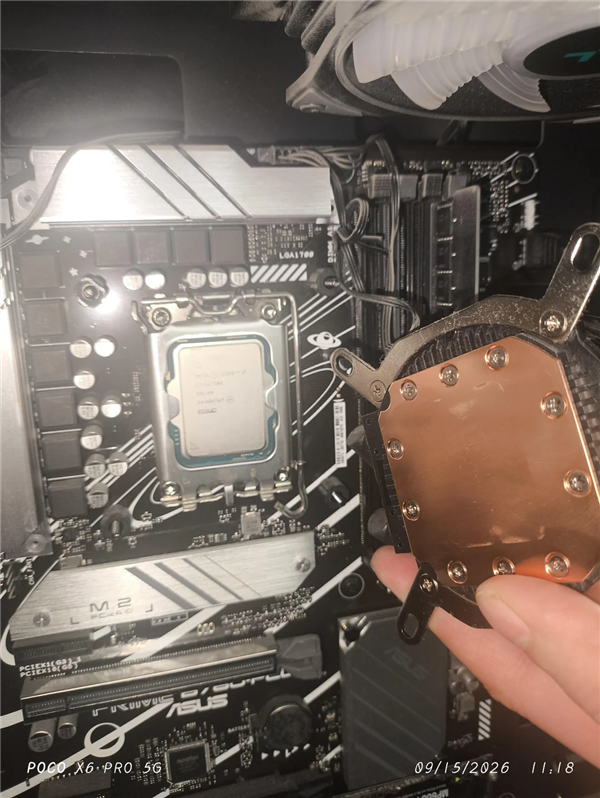
Upon inspection, the user discovered that the space between the CPU heat spreader and the AIO liquid cooler was empty. Stress testing with OCCT caused the processor temperature to spike to 100 degrees Celsius, suggesting the chip had been running at extreme temperatures for an extended period.
The system utilized a front-mounted AIO liquid cooler, which further hindered thermal efficiency. Despite the lack of thermal paste, the direct contact between the copper cold plate and the CPU, combined with the processor's internal thermal protection mechanisms, allowed it to remain functional by triggering aggressive frequency throttling.
The CPU has since been fitted with thermal paste and is operating at normal temperatures. However, the long-term impact of three years of high-heat operation on the integrity of the transistors remains uncertain.