

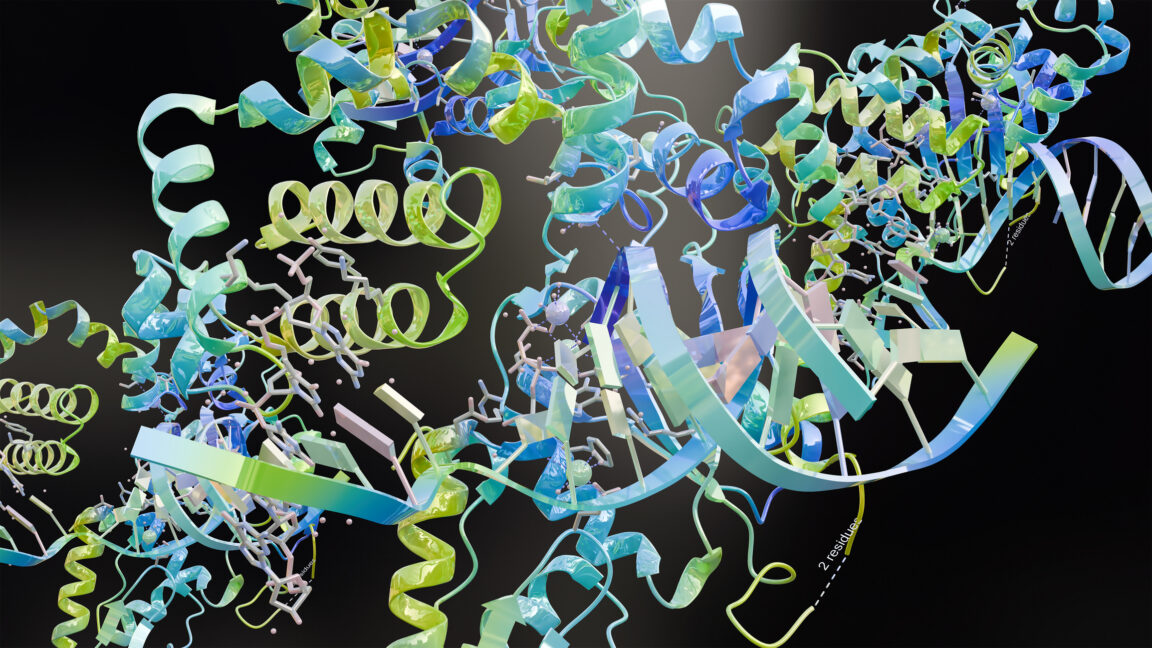
Google's DeepMind team has introduced SynthIDBio, a system designed to embed watermarks into AI-generated protein sequences. The technology aims to enhance biosecurity by allowing researchers to identify proteins created by trusted organizations, thereby distinguishing them from potentially hazardous, unverified sequences.
The system functions as an extension of the ProteinMPNN design tool. During the protein construction process, SynthIDBio uses a cryptographic key to suggest specific amino acids. The software only incorporates these suggestions if they maintain the protein's structural integrity and functional performance.
Because the watermark is distributed across the entire sequence, it cannot be easily removed. Detection requires scanning the full protein using the original key to statistically verify the presence of the watermark. Testing confirmed that watermarked proteins successfully bind to their intended targets.
The researchers identified several limitations to the current approach. The system may struggle with very short proteins that lack sufficient space for a watermark, and the signal could be diluted if an AI-designed protein is fused with natural sequences. Furthermore, the security of the method depends on the management of the cryptographic keys.
While SynthIDBio currently integrates with ProteinMPNN, it is not yet compatible with all AI protein design software. Google suggests that this tool will help DNA synthesis providers focus their screening efforts on unverified sequences, though it does not provide a complete guarantee of biosecurity.

