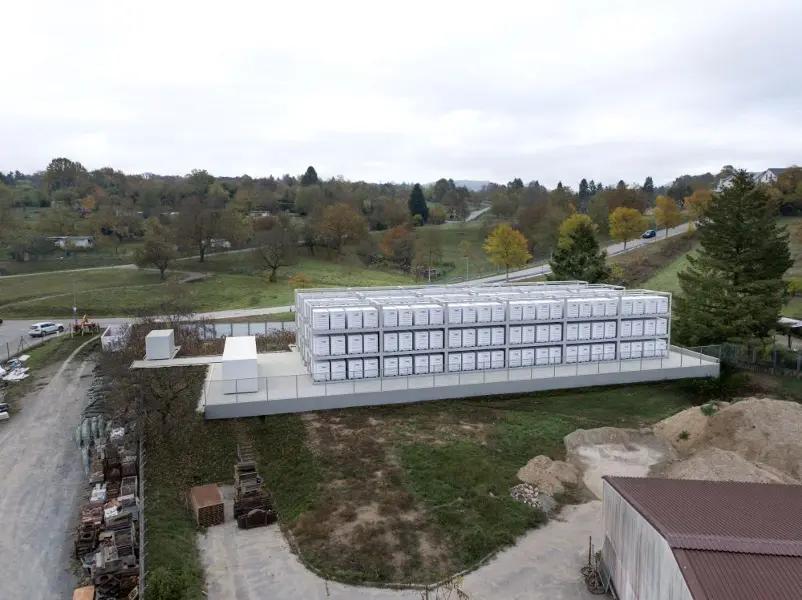
The project, valued at approximately €15.2 million, will be located at a former liquefied gas storage facility in Germany. It is a joint effort between Stadtwerke Gaggenau and CAPAC AG, utilizing technology provided by the American company Eos Energy Enterprises.
The Eos Indensity system relies on aqueous zinc-bromide chemistry, excluding lithium, cobalt, vanadium, and rare earth elements. The electrolyte used is non-flammable, which allows for denser module placement and eliminates the need for active cooling systems.
The facility is designed for a 25-year service life with an estimated capacity loss of no more than 3.6 percent. It will operate in a four-hour cycle, storing excess energy from wind and solar sources to supply the grid during peak demand periods.
The system is rated for a power output of 7.5 MW and a storage capacity of 30 MWh, with the technology supporting storage durations between 4 and 16 hours. The units are designed to function in temperatures ranging from -20 to +50 degrees Celsius.
Construction is scheduled to commence in 2027, with the facility expected to become operational in 2028. Upon completion, it will rank among the largest zinc-bromide energy storage complexes in Europe.