

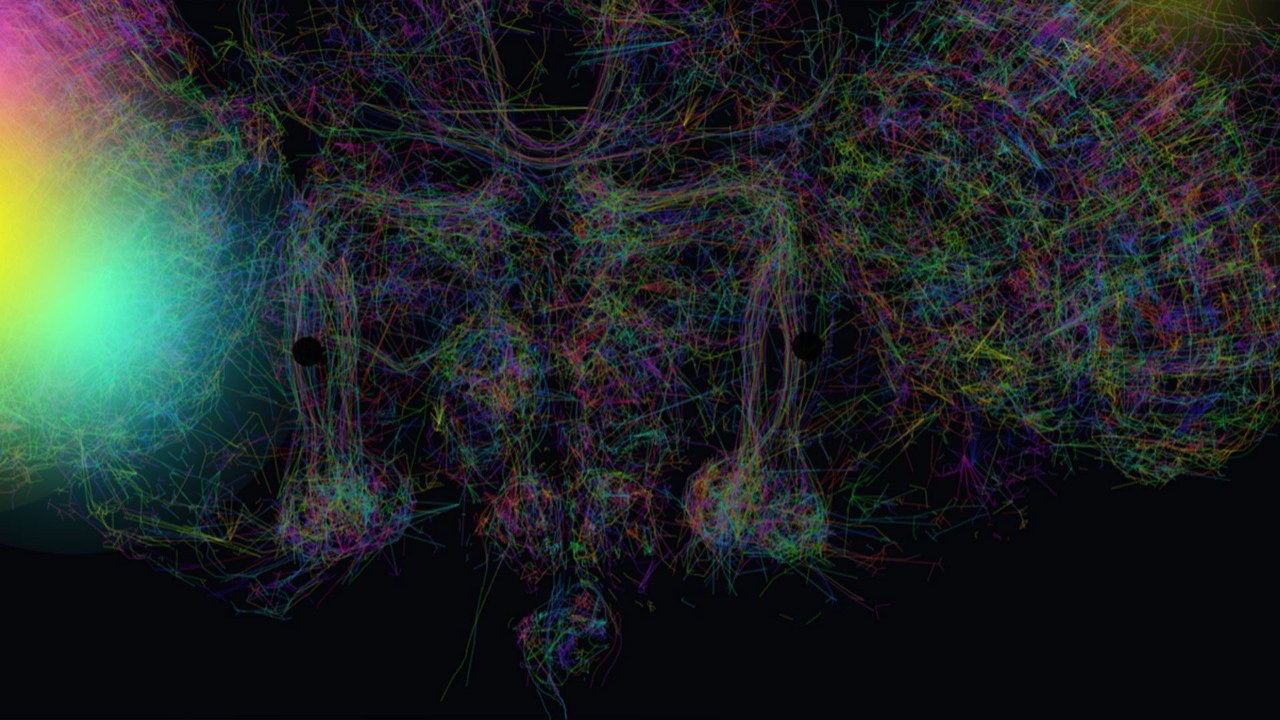
FutureBit has launched HashFly, a proof-of-concept web application that simulates Bitcoin mining using a reconstructed fruit fly brain connectome. The project utilizes data from Google’s MaleCNS v1.0 dataset, which maps 165,122 neurons of an adult male fruit fly.
The current demo focuses on simulated photoreceptors that process block headers, triggering PPL101 neurons when a SHA-256 target is computed. During testing, the web app displayed 2,914 active traces and achieved a performance of approximately 100 kH/s.
FutureBit claims that if the model were scaled using actual organic neurons, it could reach an efficiency of 1 watt per terahash. This would represent a 10x improvement over the efficiency of current 3nm silicon ASICs, based on total power consumption estimates.
The company plans to expand the simulation to include all neurons from the dataset and publish its findings. This initiative follows other experimental projects using the same connectome data, including a separate mining scheme known as FlyMiner.

