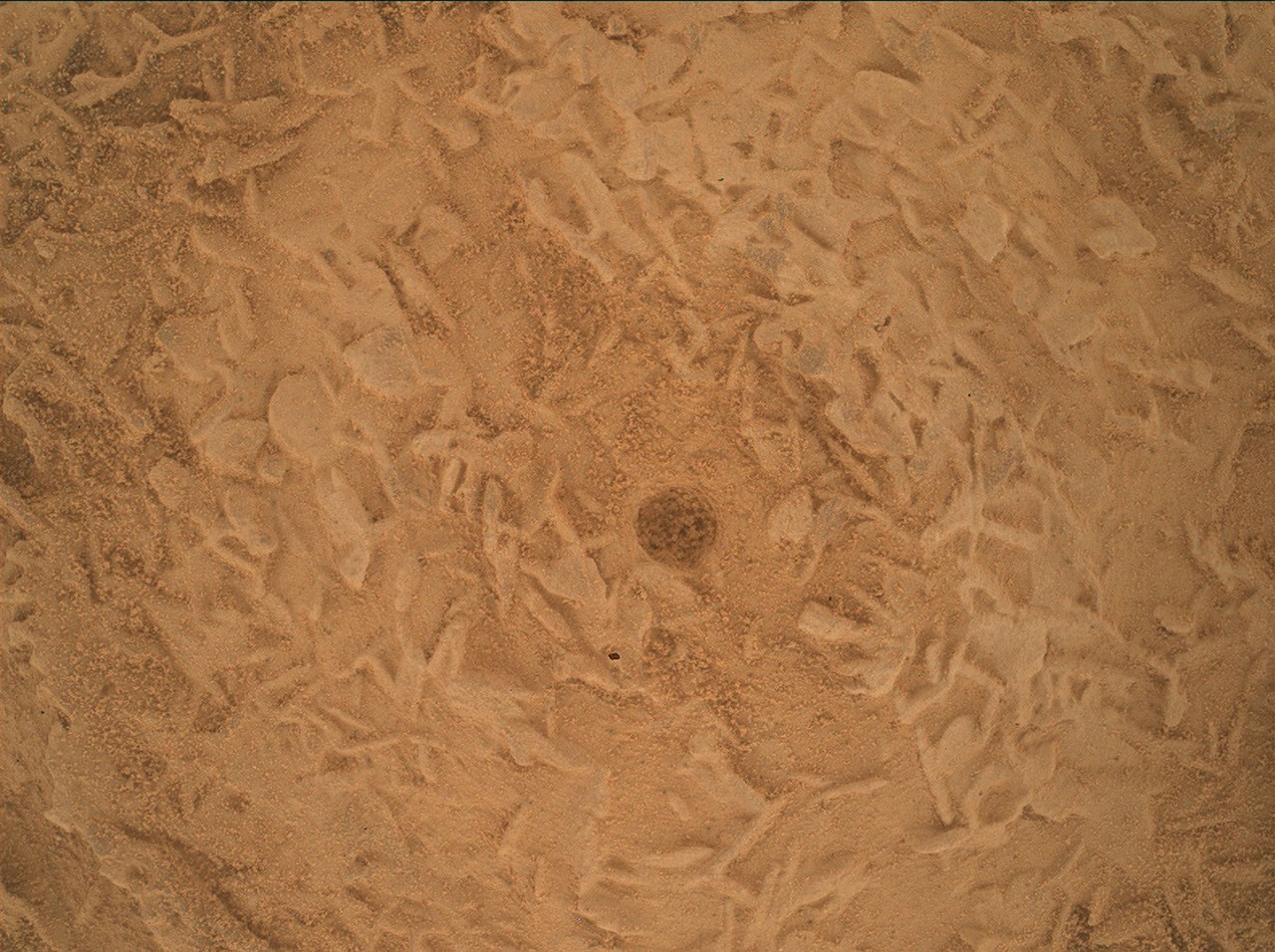
NASA's Curiosity rover has identified disc-shaped geological features on Mars at a site informally named Salar de Vacas. These structures measure approximately 3 to 4 millimeters in diameter and 1 millimeter in thickness. The rover captured these details on September 16, 2026, during Sol 5016, using its Mars Hand Lens Imager.
The research team is investigating whether these formations result from crystalline mineral growth during fluid evaporation or are fragments of eroded rock layers. To determine the composition, scientists are utilizing the rover's LIBS and APXS instruments on targets such as Puya Raimondii and Salar de Vacas.
Curiosity is currently preparing for a new drilling campaign, its first above the erosional supersurface since leaving the Campo Marte site. The rover has traveled over one kilometer to reach this new workspace. The mission team plans to conduct a preload test and drilling following initial contact science analysis.
In addition to surface studies, the rover continues long-distance imaging of the Valle Grande area. Using ChemCam and Mastcam, the team is creating mosaics of surrounding buttes to map sedimentary structures and analyze the formation and erosion history of the region.