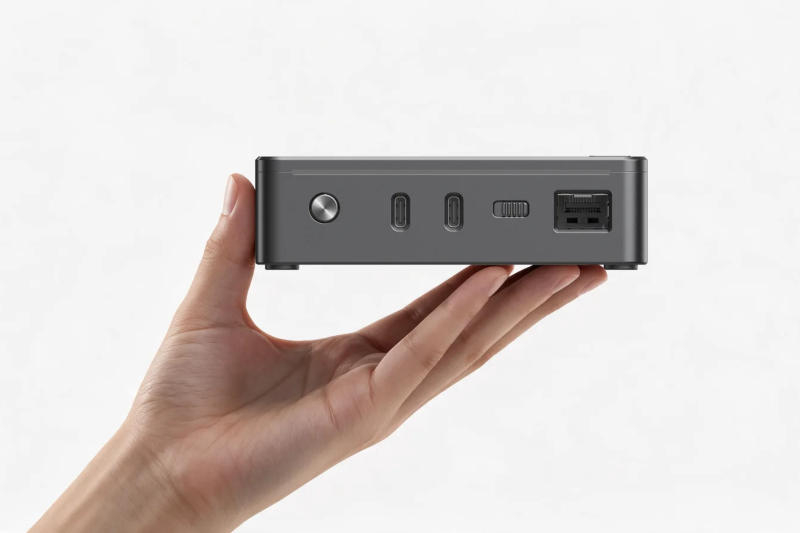
The NapiSci platform is an educational prototyping kit based on the NAPI-C module, which utilizes the Rockchip RK3308 processor. The module features four ARM Cortex-A35 cores, 512 MB of DDR3 RAM, and 4 GB of eMMC storage. The kit is designed to allow users to assemble configurations without soldering by using modular components.
A student at the Southwest State University in Kursk used the NapiSci board for a master's thesis project focused on a bedroom climate monitoring station. The station measures environmental parameters, including temperature, humidity, light, and air quality, and transmits this data to a server to generate recommendations for room conditions.
The project integrates several sensors: SHT31 for temperature and humidity, BH1750 for light, and BMP280 for pressure. Additionally, the student implemented an analog path for a MAX4466 microphone module and an MQ-135 air quality sensor, alongside a Wi-Fi ESP-01 module for connectivity, as these were not part of the standard kit.
The monitoring system operates alongside a wearable device that tracks heart rate and movement via an ESP32-C3 module. While the server generates a sleep hypnogram based on the wearable's data, the NapiSci station independently logs environmental data. The system uses SQLite for local data buffering to prevent loss during network outages.
During testing, the developer addressed technical issues, including a 5-degree Celsius temperature offset caused by sensor self-heating and incorrect pressure readings due to signed integer conversion errors. The station runs on NapiLinux, a lightweight distribution with an overlay-based file system to ensure stability during power interruptions.