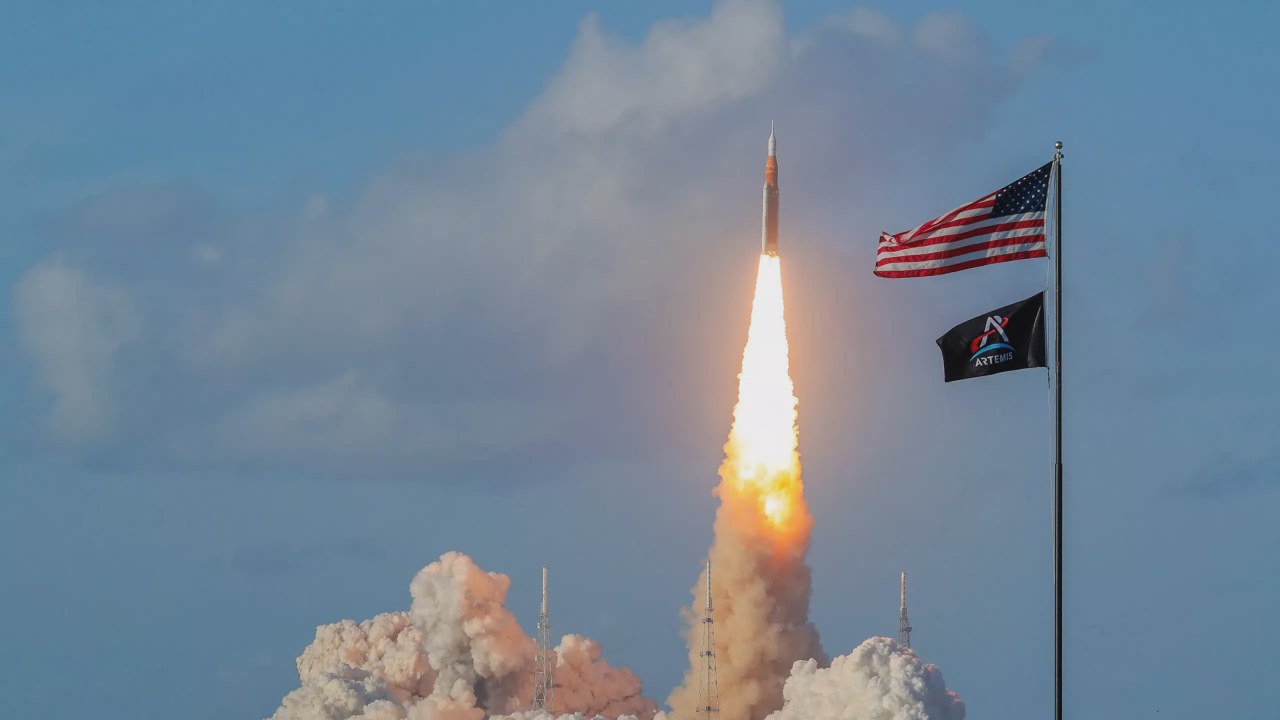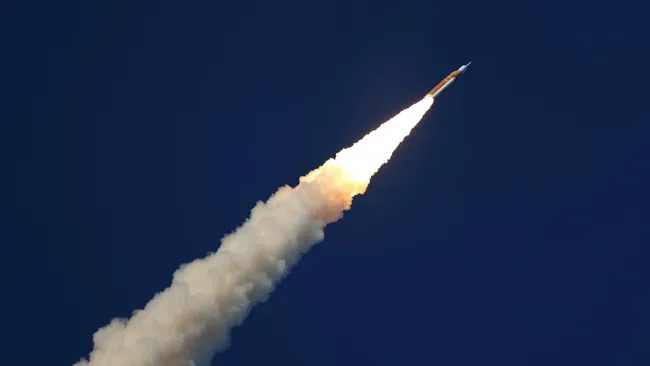
Researchers from National Cheng Kung University analyzed data from high-precision ground-based GPS stations to study the impact of the Artemis II mission. The study revealed that the launch of the SLS rocket caused significant disturbances in the Earth's ionosphere, located above 50 kilometers in altitude.
The ionospheric disruption caused by the Artemis II launch was found to be up to 10 times stronger than that observed after SpaceX Starship test flights, despite the Starship having twice the takeoff thrust. The rocket created two distinct holes in the ionosphere, each stretching approximately 5,000 kilometers across North America.
These disturbances led to changes in electron density, resulting in GPS positioning errors of several meters. According to Professor Charles Lin, a deviation of about two meters is sufficient to cause autonomous vehicles to drift out of their lanes or impact drone navigation.
The study identified that the second-stage engine burns, occurring over an hour after launch at an altitude of 185 kilometers, caused more significant ionospheric effects than the initial core stage ascent. These findings were published as a preprint in the journal Geophysical Research Letters.