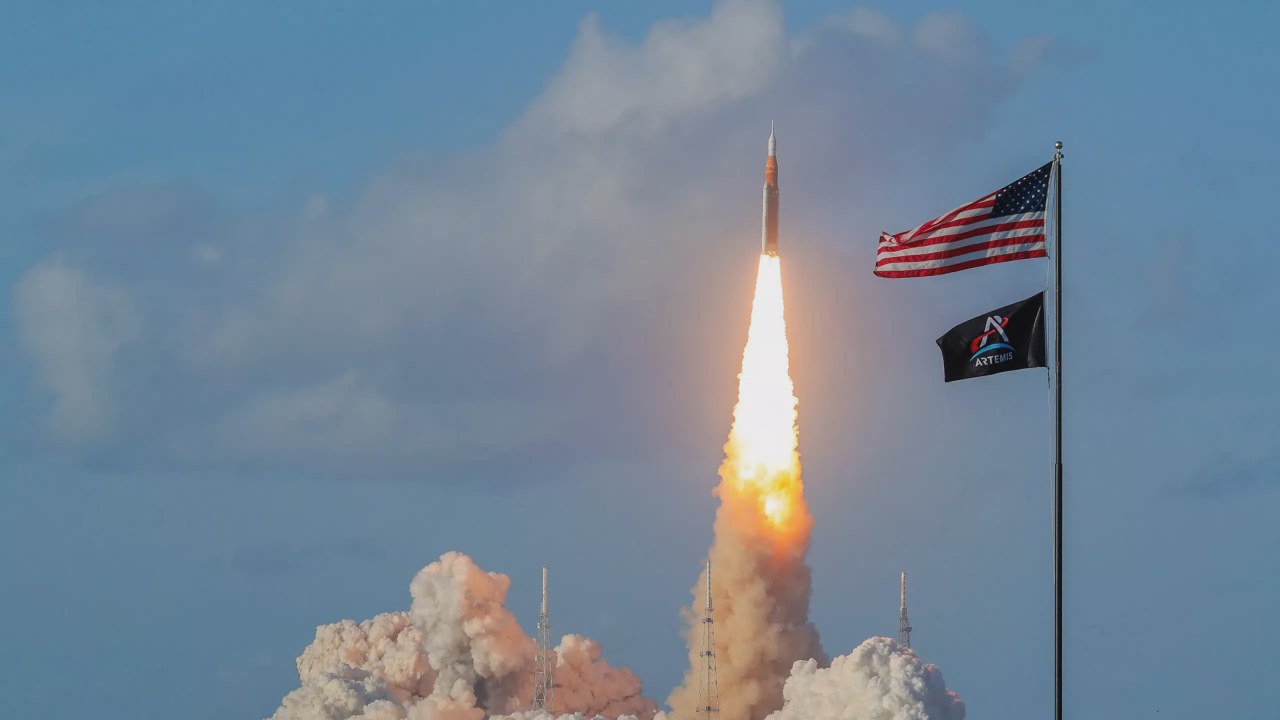
The Artemis II mission, conducted earlier this year, created two massive electromagnetic holes in Earth's ionosphere. Researchers from National Cheng Kung University in Taiwan identified that these disturbances, each spanning 5,000 kilometers, were caused by the Space Launch System (SLS) rocket during its ascent.
The study, published in Geophysical Research Letters, utilized a network of high-precision ground-based GPS receivers to track the impact. By measuring delays in signals traveling from satellites to the ground, scientists observed how the rocket's 65-meter core stage and subsequent upper-stage engine burns displaced free electrons in the ionosphere.
Data indicates that the SLS launch caused disturbances ten times more severe than those observed during SpaceX Starship tests. This ionospheric disruption can lead to GPS positioning errors of several meters, potentially impacting autonomous vehicles and drone navigation systems.
Professor Lin Jianhong, a co-author of the study, noted that even a few meters of deviation could cause an autonomous vehicle to change lanes. As deep space exploration missions to the Moon and Mars increase, researchers expect further potential interference with critical satellite-based navigation services.