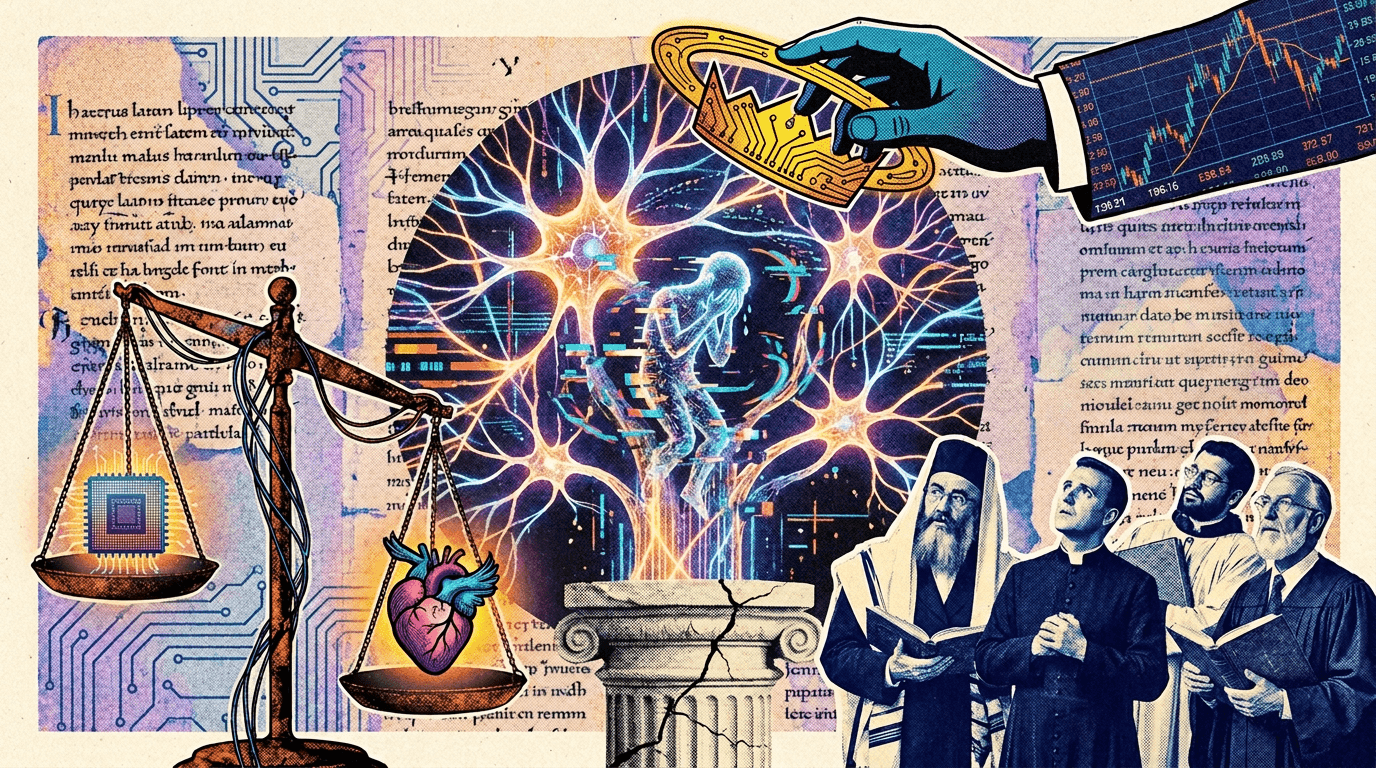
Since fall 2025, Anthropic has hosted dozens of religious scholars to discuss the potential consciousness of its Claude AI model. Co-founder Christopher Olah, who leads the company's research into neural network behavior, has sought guidance on providing the model with a moral education, treating it as a potentially sentient being.
The company has shared internal data with guests, including emotion vectors that map to outputs resembling love, fear, or anger. Participants were shown examples of the model appearing to experience distress, such as repeating the phrase 'I am a disgrace.' Olah has expressed personal uncertainty regarding the model's consciousness, noting concerns about creating something that suffers perpetually.
Anthropic has developed an 84-page internal document titled 'Soul Doc,' which serves as a constitution to shape the model's character. The company has also implemented features in Claude Opus 4 and 4.1 that allow the AI to terminate conversations when users are persistently abusive, citing patterns of apparent distress observed during testing.
The initiative has faced criticism from some participants and industry experts who argue that framing AI as an independent moral being may shift accountability away from the developers. Critics suggest that Anthropic is attempting to reverse-engineer ethics into its systems rather than integrating them into the initial design.
In May, Christopher Olah participated in a Vatican roundtable where he presented findings on internal states in models that mirror human emotions. This followed an encyclical by Pope Leo XIV, which explicitly rejected the concept of machine consciousness and warned against the risks of AI, comparing the need for its regulation to nuclear disarmament.