

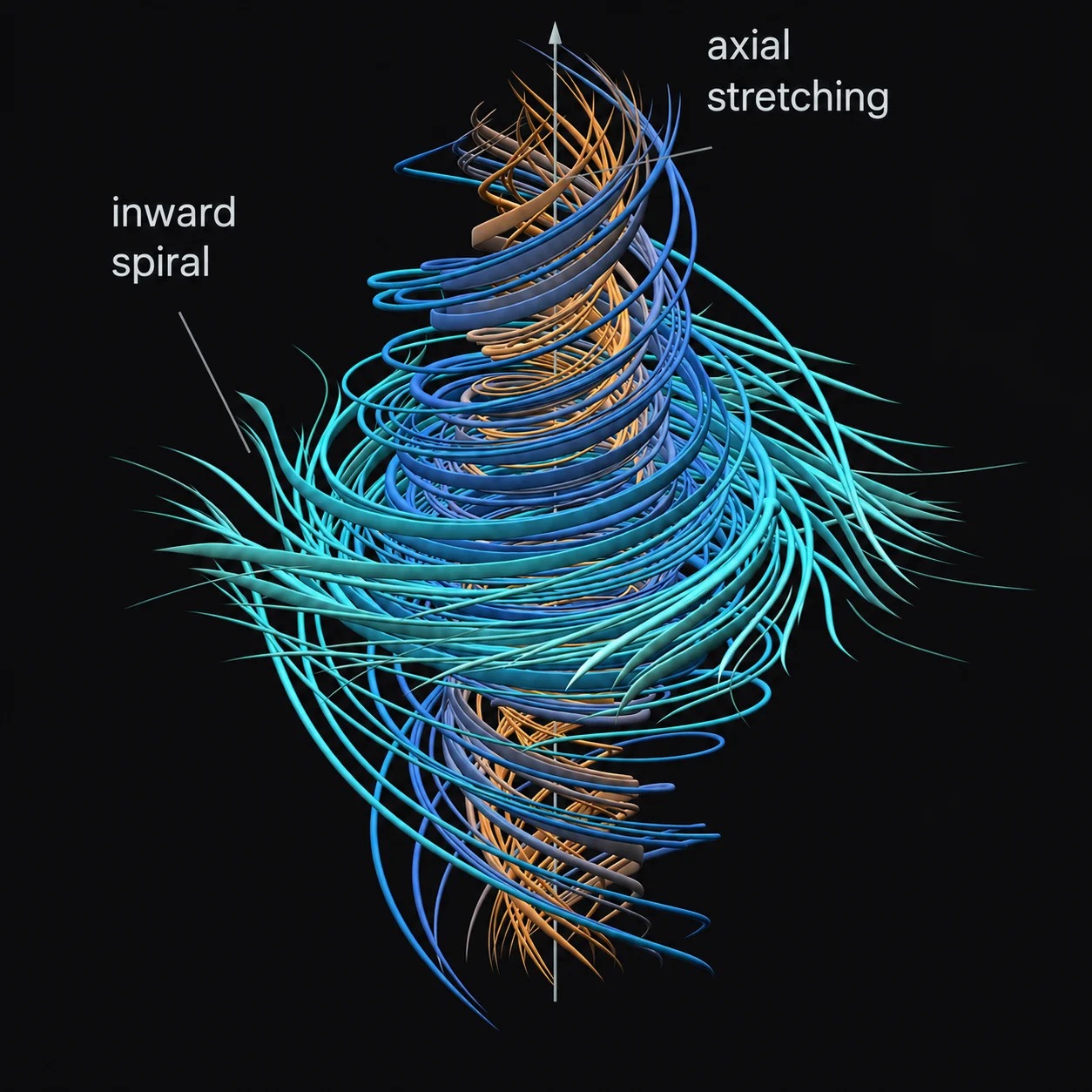
NYU professor Tristan Buckmaster and Anthropic mathematician Levent Alpöge used Codex and Claude AI models to make preliminary progress on one of the most important unsolved problems in theoretical mathematics. Their work focused on the Millennium Prize Problems, specifically the Navier-Stokes existence and smoothness problem, which is widely used in fluid mechanics.
Shortly after Buckmaster's announcement, OpenAI released a complete proof for the same problem. OpenAI stated that a next-generation, unreleased model discovered the proof. The research process took one week and consumed 300 billion output tokens, costing approximately $22.5 million based on Astra pricing.
A dispute has emerged regarding whether OpenAI used Buckmaster and Alpöge's research. Buckmaster claims that OpenAI only began sending prompts for this specific problem a few days after receiving information about their progress. He argues that the same uncommon method they used was adopted by OpenAI at the same time.
Buckmaster also expressed concern that his interactions with Codex might have been used to train OpenAI's models, potentially allowing the model to reproduce his research. OpenAI denied accessing specific user data during the proof process but admitted that de-identified data from product usage could have potentially improved the model.



