

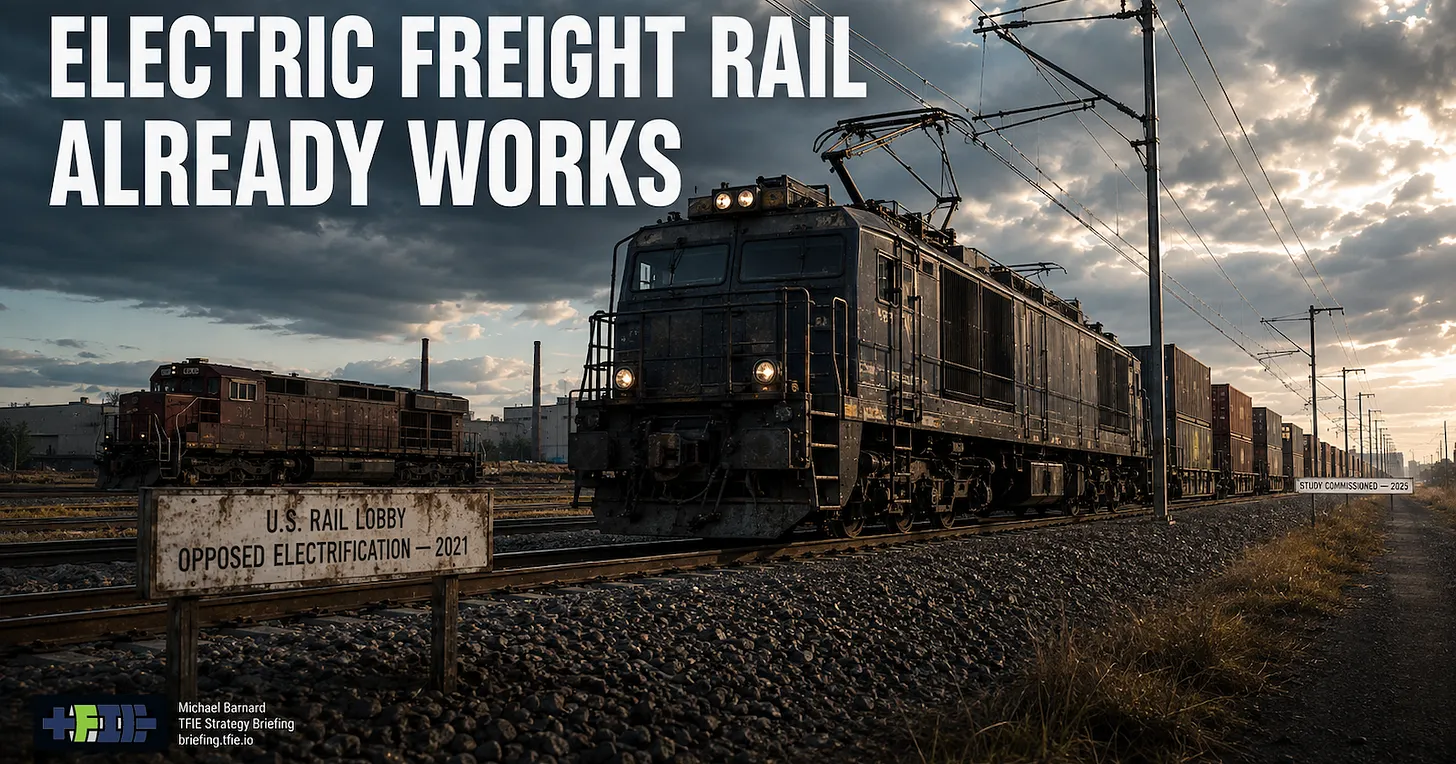
The Association of American Railroads (AAR) commissioned a study from consultancy HDR to assess the feasibility of electrifying the Class I rail network. The report evaluated the installation of catenary systems across approximately 105 000 to 139 000 track-miles.
The HDR study estimated the capital costs for this infrastructure project at between $870 billion and $1,1 trillion, including contingency funds. Following the report, the AAR declared that large-scale electrification of the network is infeasible.
Despite the AAR's conclusion, the underlying HDR report acknowledges that the system is technically feasible. The study focuses on a massive, continent-wide deployment rather than identifying specific, economically viable corridors for initial investment.
International examples, such as the electrified networks in India and China, demonstrate that heavy freight rail electrification is operational at scale. HDR cited a South African test train that exceeded the weight of typical North American freight trains used in its model.
The Federal Railroad Administration is currently pursuing a different analytical approach. In collaboration with the University of Texas, the agency is evaluating a mix of catenary, battery-electric, and dual-mode locomotives to determine where electrification provides economic value.