

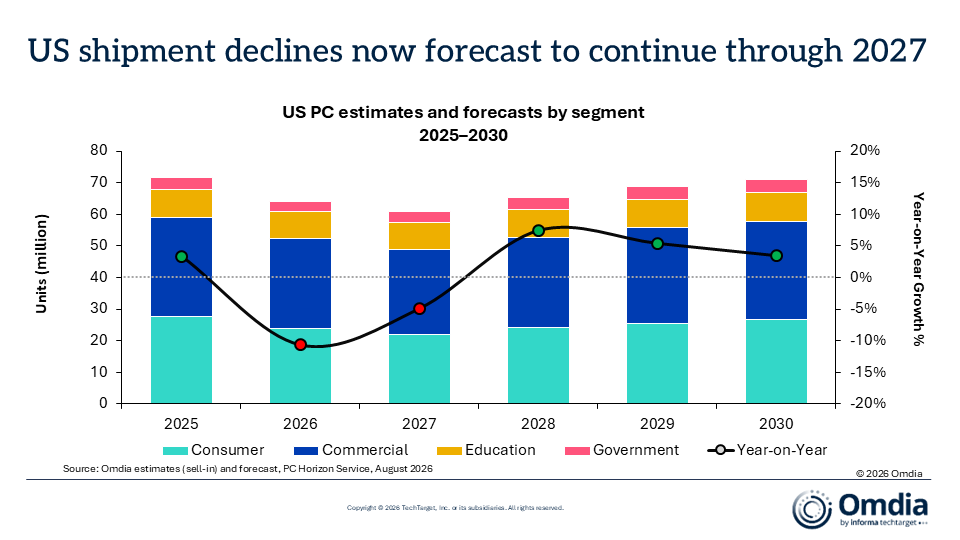
In the second quarter of 2026, US PC shipments grew by 1.0% to 18.8 million units, following a 7.0% decline in the first quarter. This growth was driven by retailers and channel partners stocking up ahead of price increases caused by DRAM and NAND supply constraints. Market revenue increased by 13.1% as OEMs prioritized high-margin, high-cost devices.
Average selling prices (ASP) exceeded $1,000 for the first time, rising 12.0% year-over-year. Commercial ASP grew by 19.0%, while consumer ASP rose by 9.7%. High-end models priced above $1,500 saw a 36.8% shipment increase, whereas entry-level PCs under $699 declined by 6.5%. AI PCs accounted for 48.3% of shipments this quarter and are expected to exceed 50% in the third quarter of 2026.
Despite the short-term recovery, Omdia forecasts a 10.7% decline in total US PC shipments for the full year 2026, with an 18.4% drop in the second half. For 2027, shipments are expected to fall further by 4.9%, and total market revenue is projected to decrease by 6.0%. Growth is not expected to return to the consumer and commercial sectors until 2028.
Sector performance varied significantly. Government shipments fell by 24.4% due to budget pressures from rising prices, while education shipments grew by 9.9%. Apple's shipments rose by 32.1%, moving it to third place, with a 29.4% share of the consumer market and 50.6% growth in the commercial sector. Lenovo grew by 2.0%, while HP fell by 3.7% and Dell declined by 8.8%.
Dell's US Chromebook shipments dropped by 47.0%, compared to a 10.0% decline in the overall US Chromebook market. Both HP and Dell reported revenue growth despite shipment declines, as higher ASPs offset the volume loss. Retailers like Best Buy, CDW, and Insight Enterprises also reported that higher prices helped mitigate the impact of weak sales.



