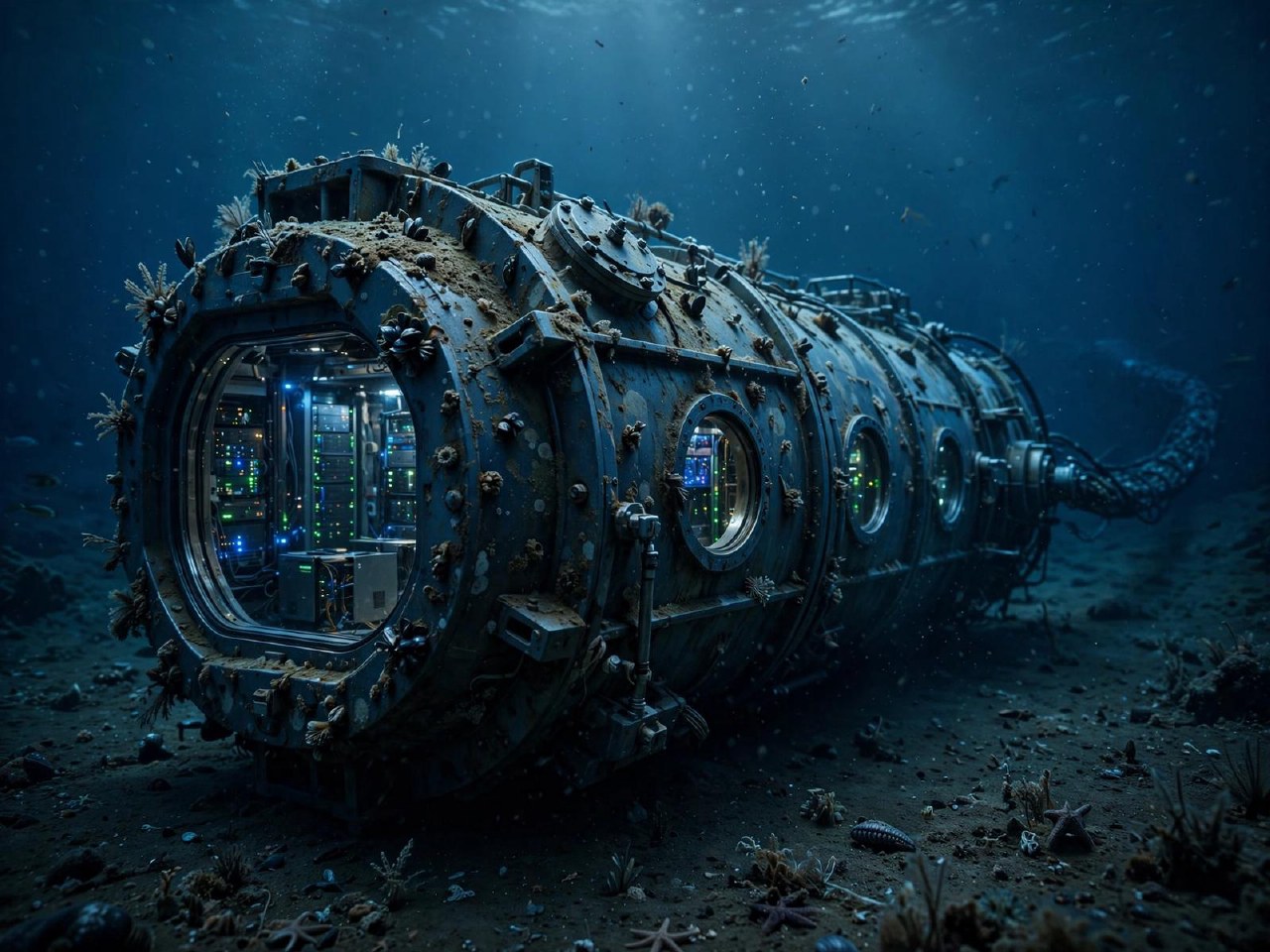
The Project Natick experiment by Microsoft, launched in 2018 near the Orkney Islands, involved a module with 864 servers. While the underwater setup recorded an eightfold lower failure rate compared to land-based units, Microsoft ceased development in June 2024. The primary challenge remains maintenance, as repairing equipment requires lifting the entire module to the surface.
In May 2026, HiCloud launched a commercial underwater data center near Shanghai with a 24 MW capacity. The project, costing $226 million, utilizes seawater for cooling and integrates offshore wind power. HiCloud is currently evaluating a potential expansion to 500 MW, despite ongoing difficulties regarding infrastructure, connectivity, and the logistical complexities of underwater operations.
On land, companies are targeting northern regions, such as Google's September 2026 announcement to invest at least €13 billion in Finnish AI infrastructure, including three new data centers. However, cold climates do not eliminate the need for robust power grids, fiber-optic connectivity, and transport. Remote Arctic locations face high construction costs and challenges related to permafrost.
Operators continue to prioritize proximity to users to minimize latency, which is essential for financial services and real-time applications. Ultimately, the choice of data center location depends on a combination of factors, including electricity availability, cooling costs, and overall operational feasibility, rather than relying solely on low ambient temperatures.