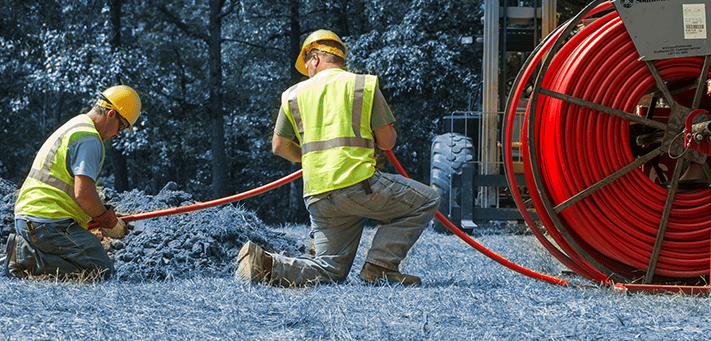
Southwire, a Georgia-based manufacturer, reports that its cable-in-conduit (CIC) product reduces total installation costs for EV charging sites by 25 to 30%. The product features conductors pre-installed within HDPE conduit on a single reel, streamlining the underground infrastructure process.
For charging dispensers, the company emphasizes the need for durable, flexible cables capable of withstanding public abuse. Roughly 95% of Southwire’s EV charging cables are custom-built to meet specific project requirements, addressing challenges like kinking and degradation from improper handling.
As power demands reach megawatt levels, specifically around 1,500 A, Southwire is moving toward liquid-cooled cable designs. These systems use coolants like water-glycol or dielectric oil to manage heat, allowing for smaller, more flexible copper conductors while maintaining high current capacity.
The industry-wide transition to the North American Charging Standard (NACS) connector has necessitated smaller, more complex cable configurations. Engineers must now integrate shielded signal wires to mitigate electrical noise while ensuring the cables remain manageable for end-users.
To improve longevity, Southwire utilizes a neutralization process during cabling to prevent 'corkscrewing' and recommends adherence to the NEMA EVSE 40007 standard for cable management systems to keep heavy cables off the ground and prevent physical damage.