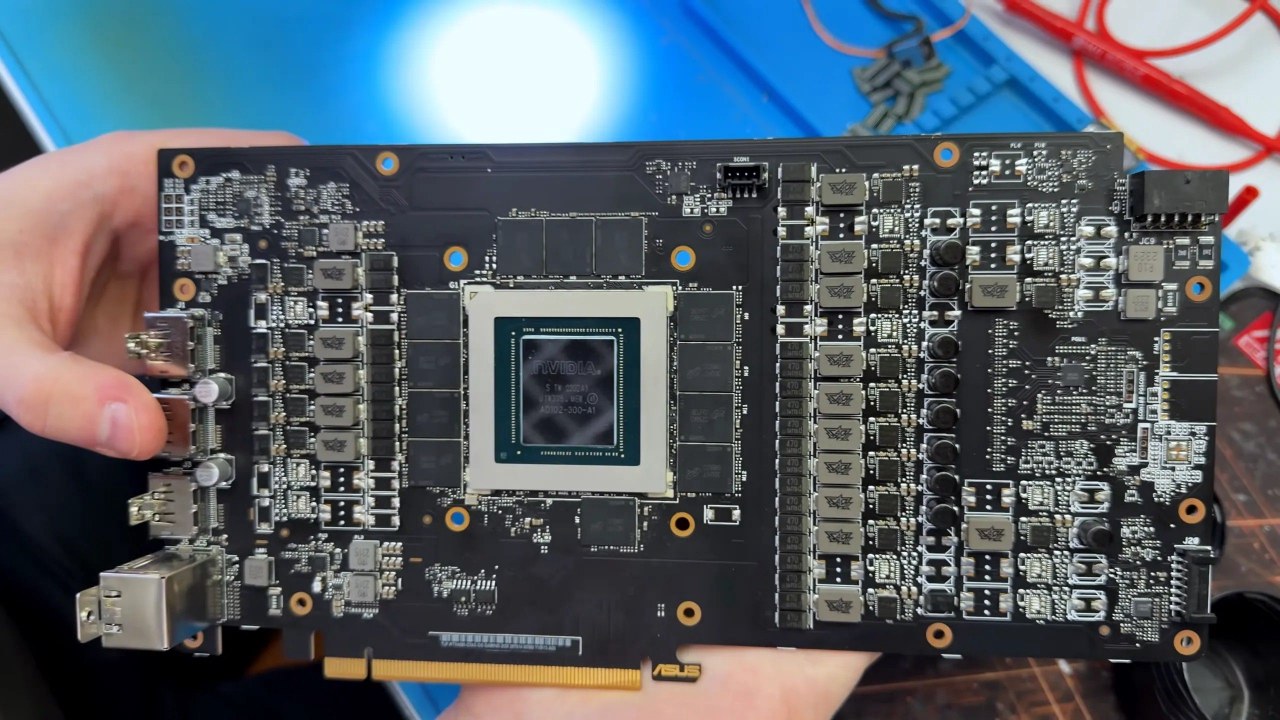
A Russian repair specialist known as VIK-off recently examined a counterfeit RTX 4090 graphics card. The customer purchased the unit as a bare PCB for $350, but the lack of a cooling system prevented pre-purchase verification.
The counterfeiters employed sophisticated methods to deceive buyers. They soldered a fake GPU die onto the board using a ball grid array, mimicking the original manufacturing process. The device featured realistic markings on the GPU package and chip housing.
Technical analysis revealed several inconsistencies, including the substrate color and surface reflections. Upon removal, the fake die lacked the contact area of a functional processor, and the solder mask degraded during cleaning.
The memory chips also proved to be fraudulent. While they bore markings resembling genuine Micron components, they were identified as GDDR6 instead of the GDDR6X memory required for an RTX 4090. The specialist suggests the PCB might be based on an RTX 3090 Ti.
This incident follows a similar case from June, where a shop owner in China discovered a fake RTX 4090 purchased for approximately $222. That unit contained a plastic imitation of the AD102 GPU die and carried an impossible manufacturing date of 2030.