

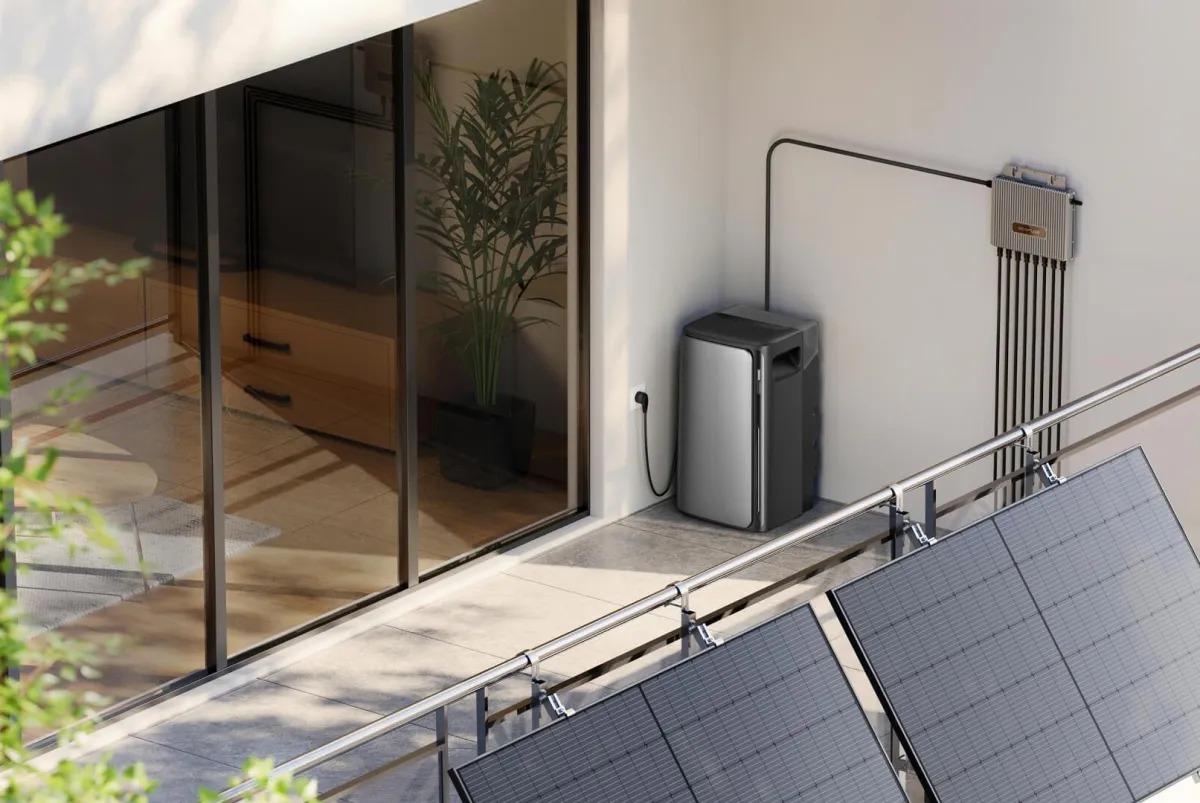
DIY plug-in solar kits, often called balcony solar, are expanding into the US market. Unlike traditional rooftop solar projects that cost at least $15,000 and require professional installation, these kits start at approximately $300 and can be installed by consumers without an electrician.
The systems typically consist of solar panels and a microinverter that connects to the home grid. Users can add battery storage, with 1kWh units starting at $500 and 3kWh units at $1,500. These batteries allow for energy use after sunset and provide backup power during outages.
Regulatory shifts are driving adoption. Over ten US states, including Utah, Virginia, Maine, Colorado, Maryland, New Jersey, Connecticut, Vermont, and New Hampshire, have passed laws or introduced bills to allow these systems. Regulations generally waive the need for utility approval if safety requirements are met.
Market growth is supported by declining costs of solar panels and batteries. Major industry players like EcoFlow, Bluetti, and Anker are targeting the segment with modular products. For instance, EcoFlow recently launched the Stream 2 series, and Bluetti introduced the Balco series to cater to renters and budget-conscious consumers.
While European adoption is high—with about 1.5 million households in Germany using such systems—the US market is poised for potential rapid growth. Legislation is currently pending in California and New York, with approximately six additional states considering similar bills to facilitate the deployment of plug-in solar technology.