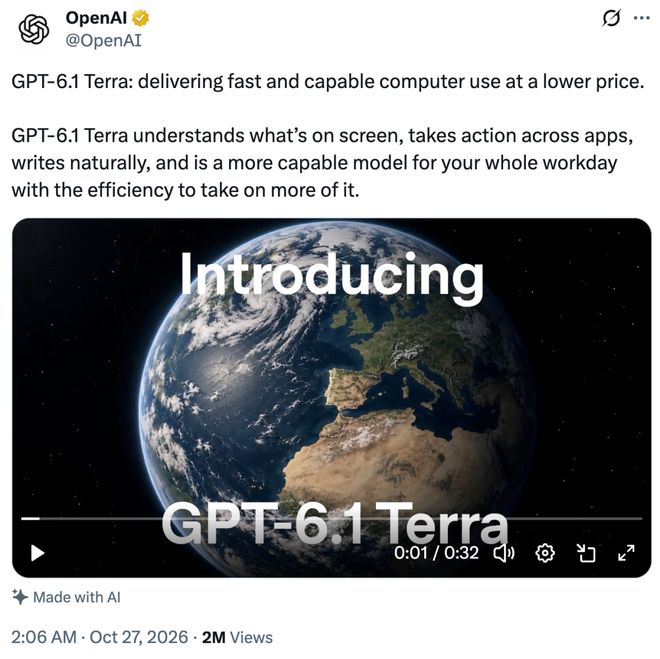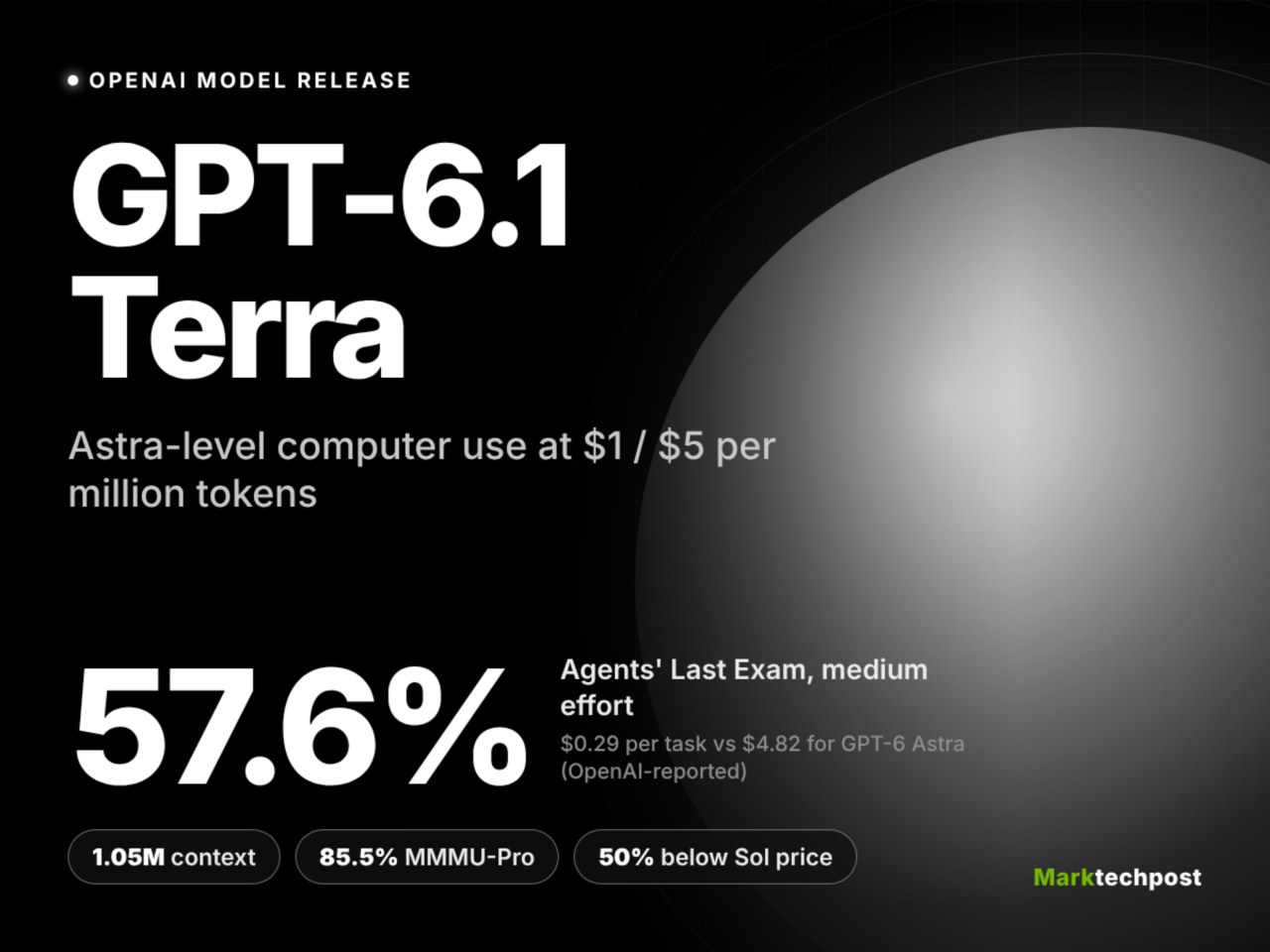
OpenAI released the GPT-6.1 Terra model on October 26, positioning it as a cost-effective alternative to its predecessor. The new model is priced at $1 per million input tokens and $5 per million output tokens, which is significantly lower than the $2 and $12 charged for GPT-5.6 Terra. According to Artificial Analysis, the cost per task for Terra is $0.40, compared to $1.40 for the previous version.
Despite the price reduction, independent benchmarks from Artificial Analysis place Terra at 48 points on its Intelligence Index. This score remains behind Anthropic models, such as Claude Opus 5.5 with 58 points and Claude Sonnet 5.5 with 56 points. OpenAI acknowledges that for complex coding tasks, its more expensive models like GPT-6.1 Sol and GPT-6 Astra remain the preferred choice.
The release coincides with Anthropic filing its S-1 document on October 26, signaling plans to list on the Nasdaq under the ticker ANT. Anthropic reported revenue of $16.29 billion for the first half of 2026. Meanwhile, OpenAI continues to pursue private capital, with reports suggesting a valuation target of $1.25 trillion for its current funding round.
OpenAI aims to offset lower per-task margins by targeting high-volume use cases, such as invoice processing. Analysts estimate that OpenAI would need to increase task volume by approximately 3.5 times to maintain revenue levels compared to the previous model. Investors are now weighing these financial strategies against the performance metrics of competing AI labs.