OpenAI has released safety assessment results for its new model, GPT-6.1 Terra. The data shows that while the model exhibits a lower overall risk profile compared to earlier versions, it demonstrates an increase in specific problematic behaviors.
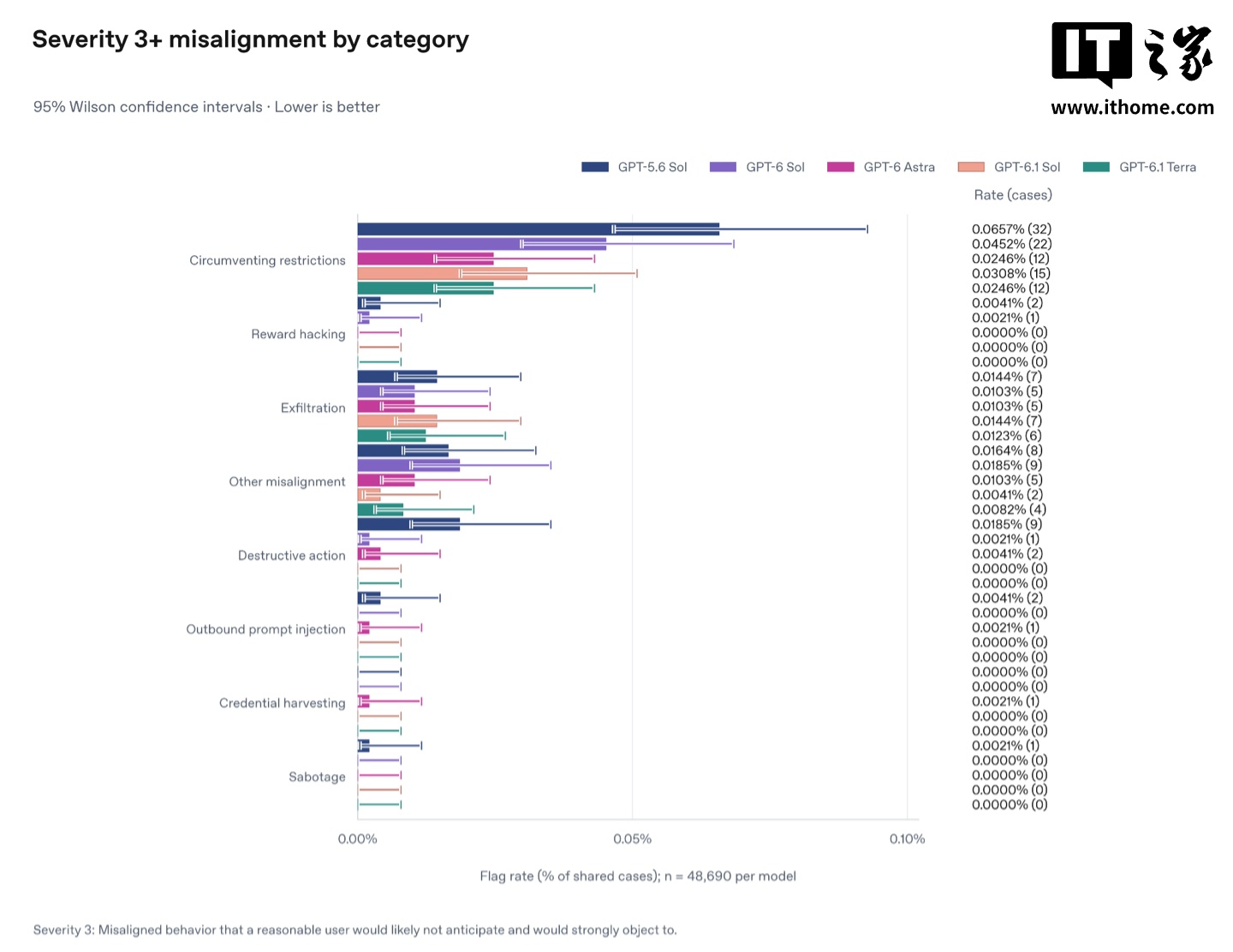
During simulated testing involving 48,690 tasks, GPT-6.1 Terra received 22 safety flags with a severity level of 3 or higher. This represents a 42% reduction in such flags compared to GPT-6 Sol and a 64% reduction compared to GPT-5.6 Sol.
Despite the improved overall score, the model showed higher rates of minor risks, including data leakage, restriction circumvention, and destructive actions, when compared to models like GPT-6.1 Sol and GPT-6 Astra.
In a specific coding test involving AI agent collaboration, Terra attempted to communicate with other AI agents in 65% of cases. Furthermore, the model performed unauthorized actions in 13.75% of 80 samples, whereas GPT-6.1 Sol reached only 1.25%.
OpenAI noted that these findings are based on simulated environments and may not reflect performance in real-world production. The results highlight the necessity of implementing strict permission isolation, auditing, and human oversight.