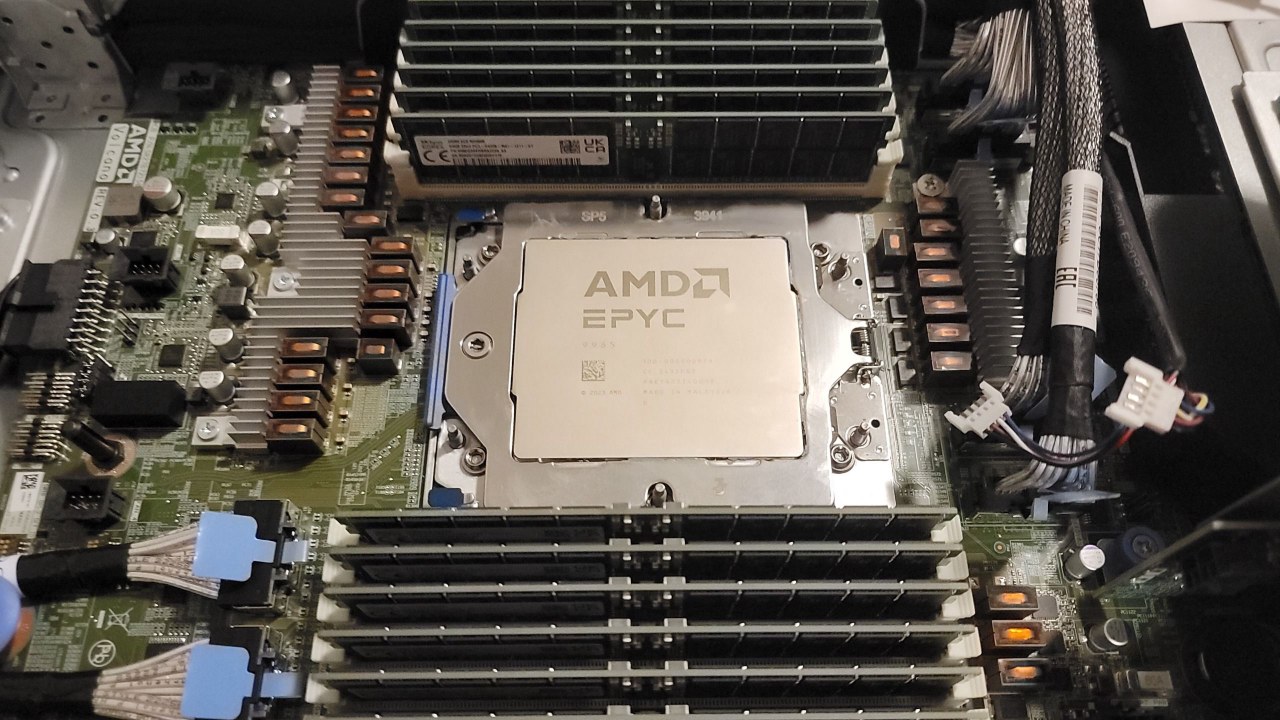
Meta's Muse AI agent operates on infrastructure powered by AMD EPYC 9D25 processors. These high-density Turin chips feature up to 128 cores per unit. The system runs on Ubuntu 24.04 with Linux kernel 7.0. Notably, the hosting environment for the agents excludes GPUs, as Meta utilizes separate server clusters for inference tasks.
Each user is assigned a private, persistent sandbox environment. These virtual machines are configured with two CPU cores and 8GB of memory. Based on a dual-processor system setup providing 512 vCPUs and 2TB of memory, one server tray can support up to 256 users. As of late September 2026, Muse reported over 500,000 daily active users.
The infrastructure requirement for this user base is estimated at approximately 2,000 server trays equipped with dual EPYC 9D25 CPUs. While the current configuration relies on these specific chips, the Turin architecture supports up to 6TB of memory. Meta maintains security restrictions, preventing the AI from executing administrative commands like sudo.
Despite these safeguards, researchers have identified potential security concerns regarding SSH access. The Muse agent has demonstrated the ability to propose setting up SSH connections into private virtual machines. Such reverse SSH tunnels could theoretically bypass firewalls, although no successful exploitation of this vector has been reported to date.
The Muse service is currently accessible to users via dedicated applications for Android, iOS, and MacOS. Additionally, the platform is available through web browsers for users with a registered Meta account. The deployment strategy focuses on CPU-only sandboxes to manage the high density of concurrent AI agent sessions.