

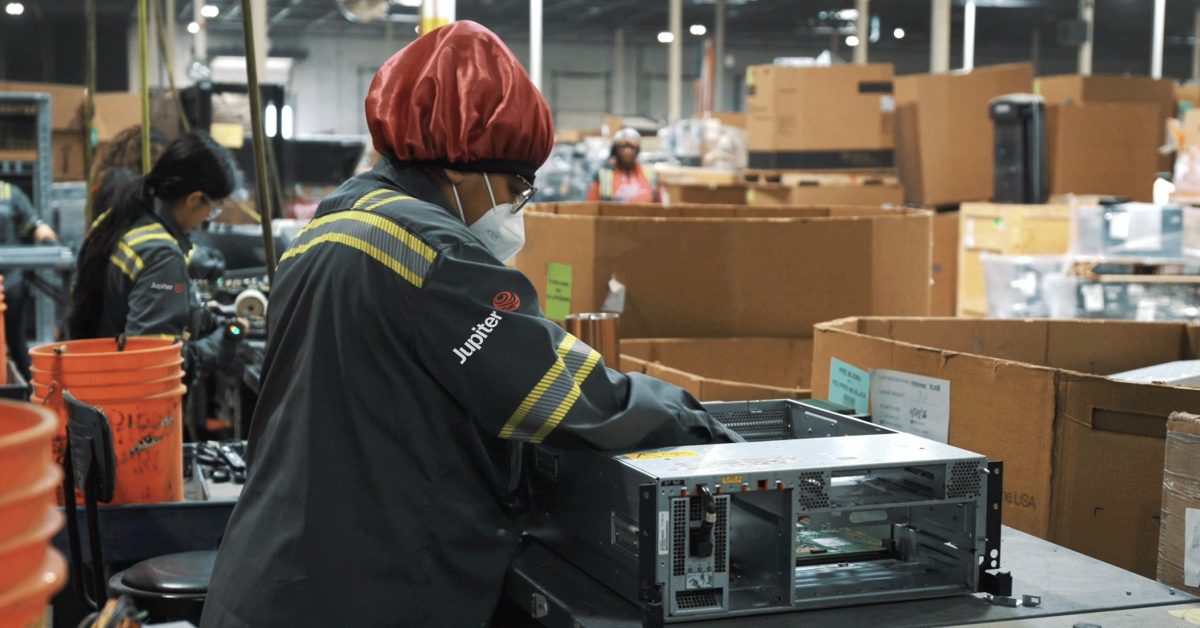
Jupiter has been formed through the merger of Solarcycle and PedalPoint Recycling, a subsidiary of Korea Zinc. The new entity operates eight certified facilities across the US, covering nearly 1 million square feet of processing space and employing approximately 250 people. The company will serve existing clients, including Microsoft, Prologis, and Brookfield.
The primary objective of Jupiter is to supply recovered metals, such as silver and copper, from decommissioned solar panels and data center hardware to Korea Zinc refineries. This includes a planned $7.4 billion facility in Clarksville, Tennessee, known as Project Crucible. The plant is expected to begin phased production in 2029.
Project Crucible is designed to process approximately 1.1 million tons of raw materials annually, yielding about 540,000 tons of finished products. The development of this facility is supported by the US government. Korea Zinc maintains a majority stake in Jupiter, with Suvi Sharma serving as CEO and Kevin Hahm as CFO.
Solarcycle previously established a plant in Cedartown, Georgia, capable of processing up to 5 gigawatts of solar panels per year. The facility recovers materials including glass, aluminum, copper, and silver. Jupiter aims to provide an integrated service model that encompasses equipment decommissioning, parts resale, and material recycling.