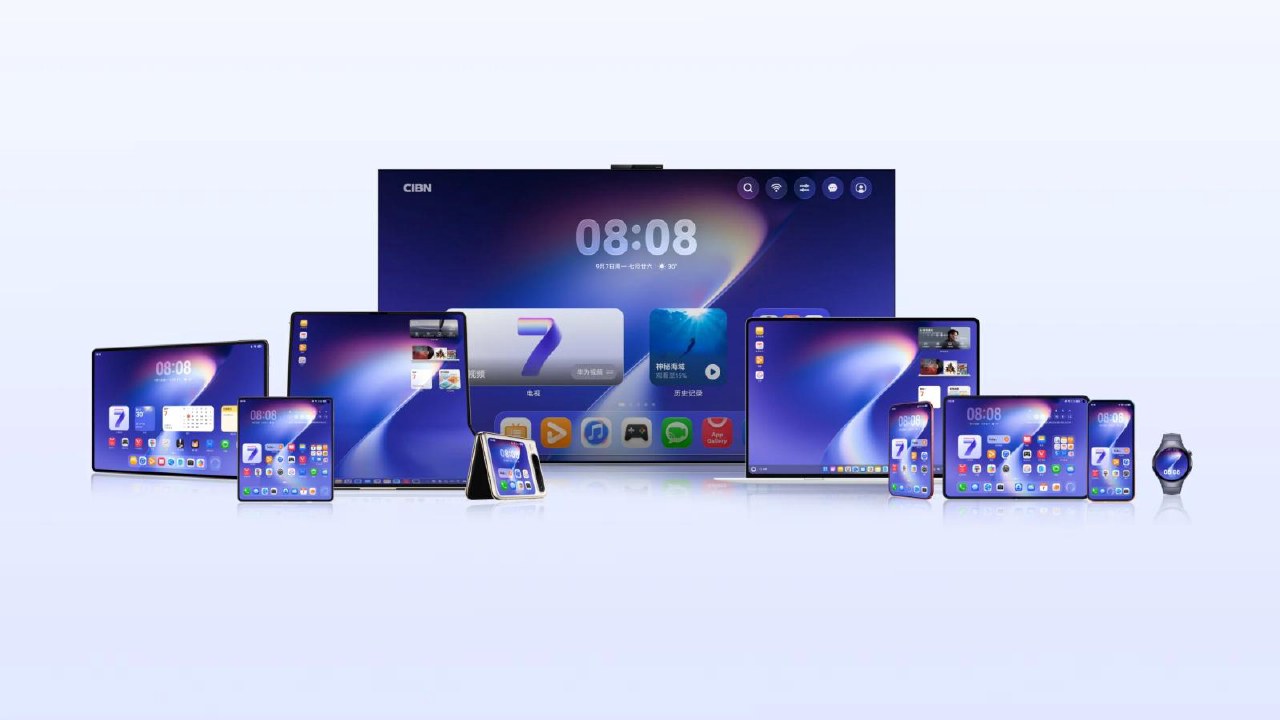
The number of devices running the HarmonyOS operating system has surpassed 99 million. Given current growth rates, the platform is expected to reach the 100 million milestone within the next week.
HarmonyOS has established itself as the third-largest mobile ecosystem globally, challenging the long-standing dominance of Android and iOS. Huawei has built a comprehensive software stack, including its own kernel, programming language, compiler, and development tools.
A significant shift in the latest version of HarmonyOS is the removal of the AOSP compatibility layer, which was a core component of previous iterations. This move marks a transition toward a fully independent software architecture.
The platform's expansion encourages the integration of domestic hardware components, such as Kirin processors, memory modules, and displays. Beyond consumer electronics, the open version of HarmonyOS is being deployed in industrial and energy sectors.
Despite reaching this user base, the company faces the challenge of long-term competition with established market leaders. Future success depends on application quality, developer engagement, and seamless cross-device interoperability.