

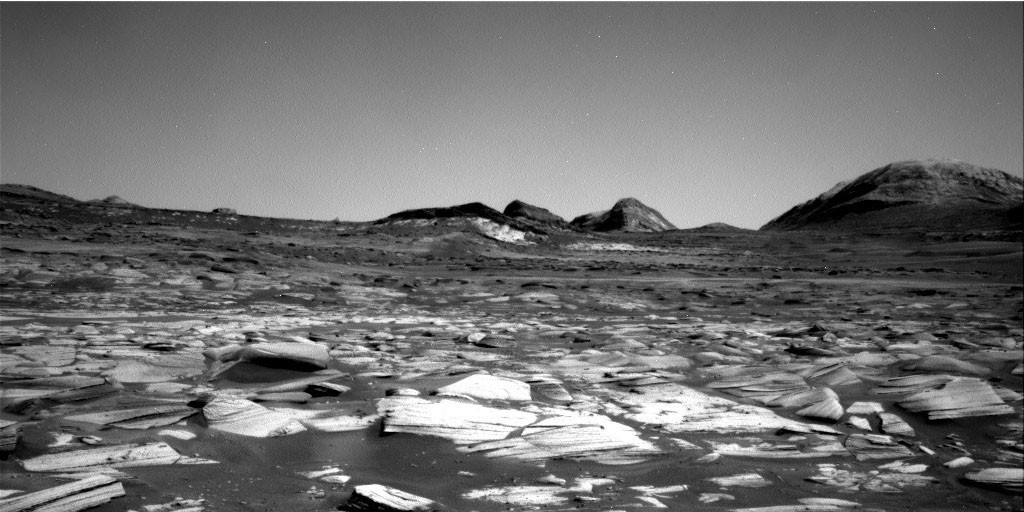
NASA's Curiosity rover is currently navigating through a region informally named Valle Grande, characterized by subtle geological banding. These bands measure between 25 and 200 meters in diameter and exhibit variations in sand content and rocky outcrop continuity.
During the recent mission period, the rover team conducted scientific investigations at several sites, including Cerro Armazones, Monte Melimoyu, Tuta Huallpas, and Acllahuasi. These activities involved using the APXS, MAHLI, and ChemCam instruments to analyze nodular bedrock and dark-toned rocks.
Following a drive of approximately 60 meters, the team identified a target block featuring laminated areas and small flakes. Researchers plan to perform further contact science and LIBS analysis on this site, targeting specific spots named Yungay, Chiu Chiu, Puya Raimondii, and Liolaemus Tacnae.
The mission team also captured extensive mosaics of the surrounding terrain, including the buttes Mishe Mokwa, Cordillera, and La Linea. Additionally, the team documented the Sullivan Field sand area, which contains various ripple formations and was named in honor of researcher Robert Sullivan.
Environmental monitoring remains a priority for the mission, with the team continuing to track atmospheric dust and observe surface phenomena. These activities include recording dust-devil movies and capturing images of the crater rim to assess local conditions.



