

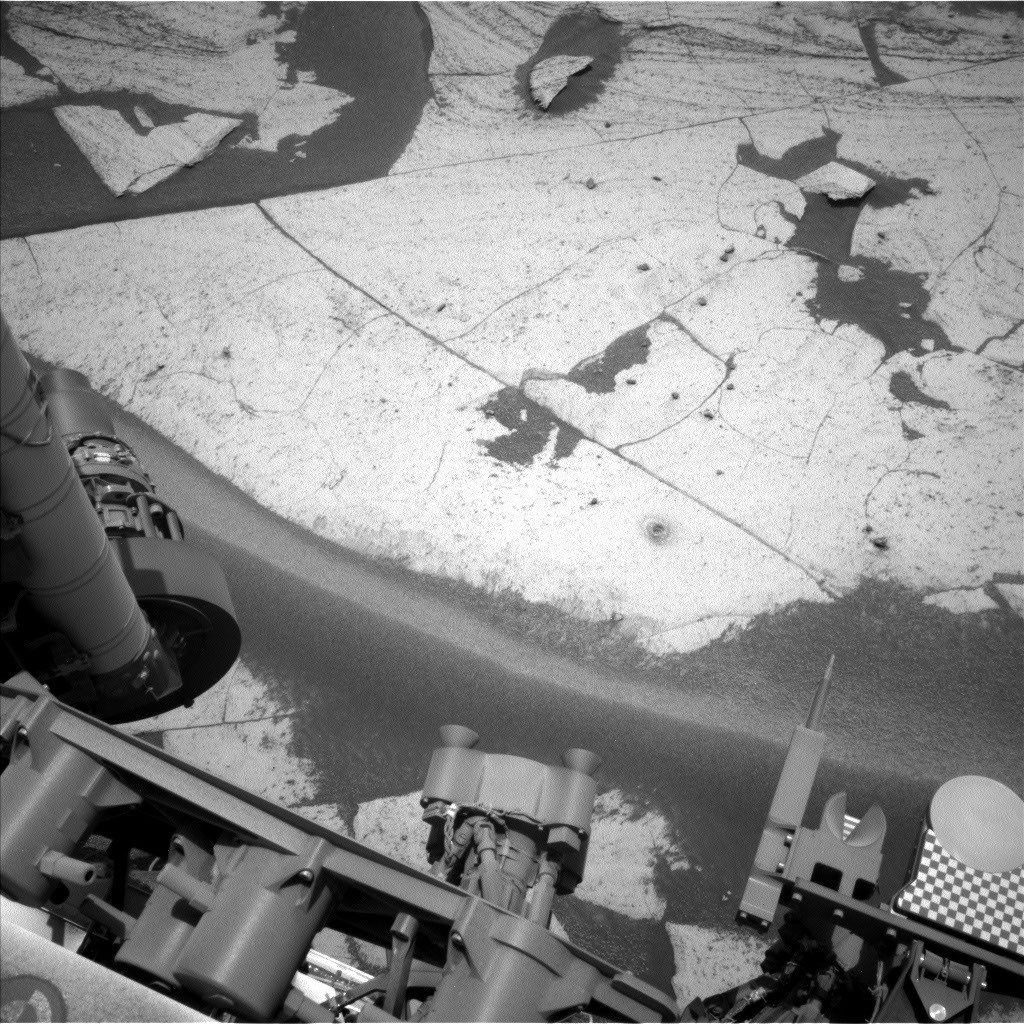
NASA’s Curiosity rover has completed a week of intensive laboratory analysis on Mars, focusing on samples collected from the Basque Lakes drill site. The mission team utilized the CheMin instrument to analyze the rock sample and prepared the Sample Analysis at Mars (SAM) suite for further investigation, including the use of a tunable laser spectrometer to measure volatile components.
Laboratory operations consume a significant portion of the rover’s daily power budget, leading to a temporary reduction in other scientific activities. Despite these constraints, the team captured a 360-degree mosaic of the surrounding area using the Mastcam instrument to provide geological context for the drill site.
The rover also conducted seven photometry observations to assess how spectral characteristics of targets change with varying solar angles. Additionally, the ChemCam instrument gathered chemical data from various materials in the workspace, including sand ripples at French Creek and loose clasts identified as Wooley and Fireside.
Ongoing environmental monitoring remains a core part of the mission. The rover continues to collect systematic measurements using the REMS, RAD, and DAN instruments, while simultaneously tracking atmospheric dust loading, cloud formations, and dust-devil activity.



