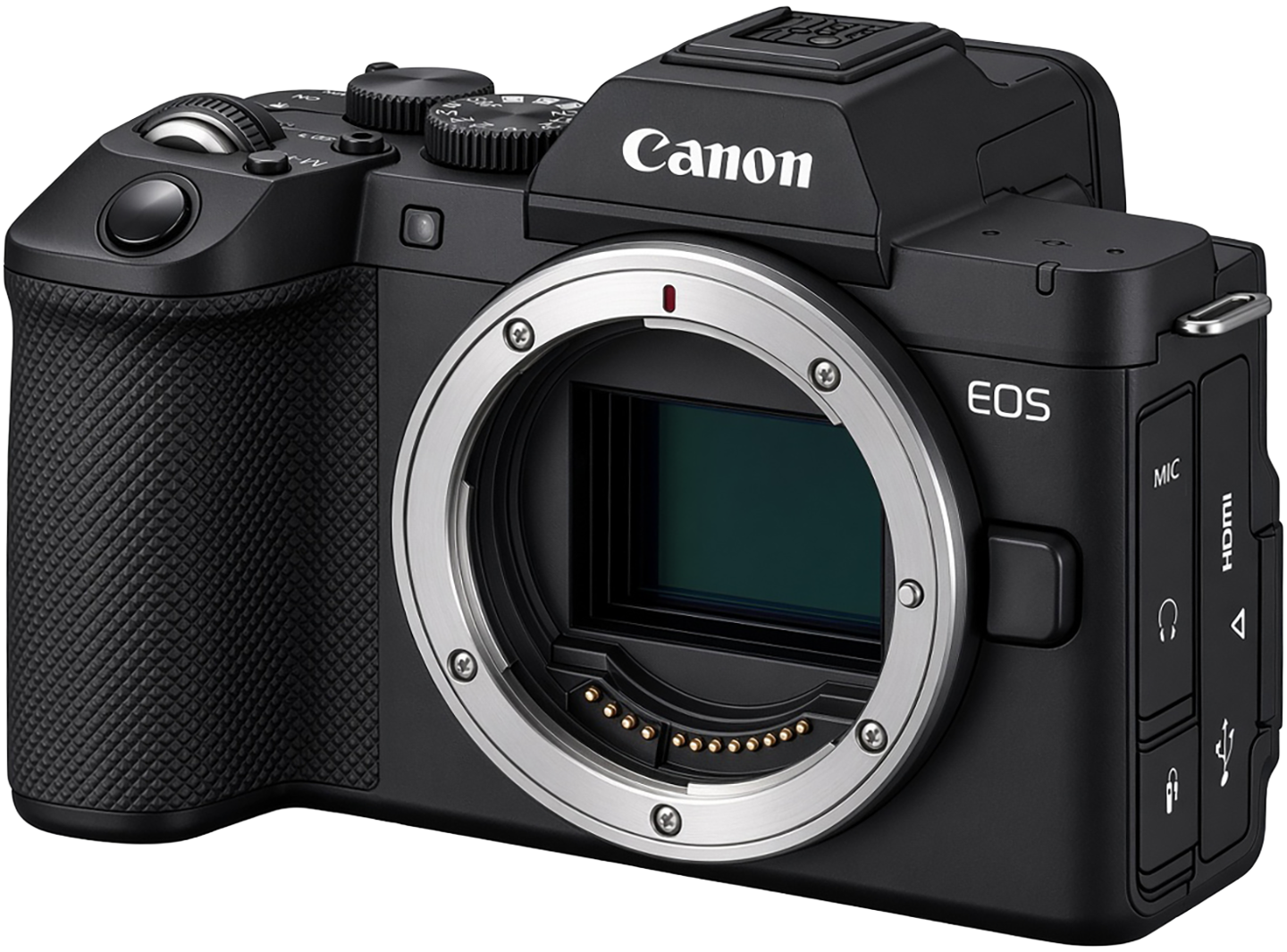
The camera features a new design language with more pronounced angular lines and a more prominent electronic viewfinder (EVF) bump. The 'EOS R8' model identifier has been removed from the body.
The device is expected to use a 24-megapixel full-frame sensor from the EOS R6 Mark II, with a native ISO range of 100 to 102,400. It may lack a mechanical shutter, relying solely on an electronic shutter with speeds up to 1/16,000 seconds, supporting 40 fps electronic burst and 20 fps pre-shooting.
A key upgrade is the inclusion of in-body image stabilization (IBIS) providing up to 7.5 stops of compensation. The focus system uses second-generation Dual Pixel AF II with integrated deep learning AI for new animal subject tracking.
Video capabilities include 4K/60p recording via 6K oversampling, 1080/180p slow motion, and built-in Canon Log 3. A new software feature allows generating 3D video from 2D images. The body includes a joystick on the back, a single SD card slot, and uses the LP-E17 battery.
The camera is rumored to be priced at €1,879 in Europe and $1,799 in the US. It is expected to be available on the market starting October 2026.