

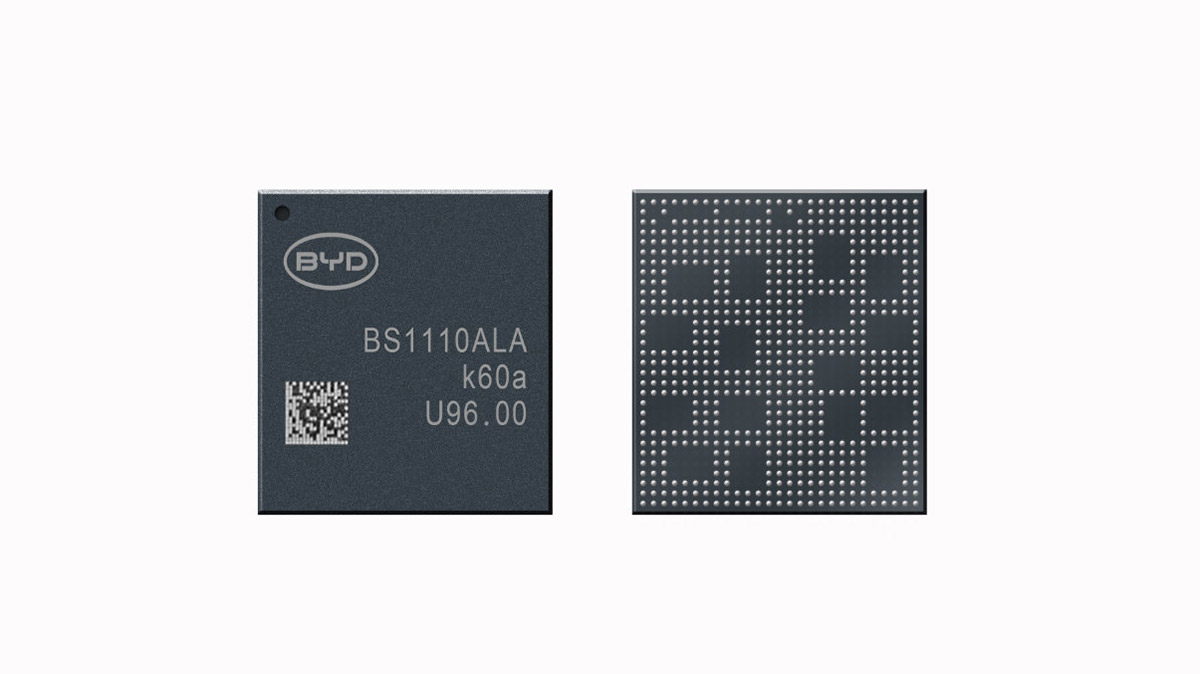
BYD Semiconductor has officially launched mass production of its next-generation 4D millimeter-wave radar chip. This component is designed to enhance the company's vertical integration in smart driving technologies and serves as a key element in its autonomous driving strategy.
The new chip is manufactured using a 28-nanometer automotive-grade process and features 8 transmit and 8 receive channels. It supports high-resolution radar systems and is compatible with mainstream SerDes interfaces, allowing integration with various smart-driving platforms.
The radar chip is designed to work with the Xuanji A3 smart-driving chip, which acts as a central computing hub. This combination supports driving systems ranging from Level 2 to Level 4, including highway navigation, urban driving, and automated parking.
Technical specifications include a detection range exceeding 400 meters, a horizontal angular resolution of 0.8 degrees, and a range resolution of 0.05 meters. The chip complies with ISO 26262 ASIL B safety standards and AEC-Q100 reliability requirements.
The device operates in a temperature range from minus 40 to 150 degrees Celsius. BYD has invested over ¥100 billion in semiconductor research and development, maintaining a team of more than 7,000 specialists across four research bases and five wafer fabs.