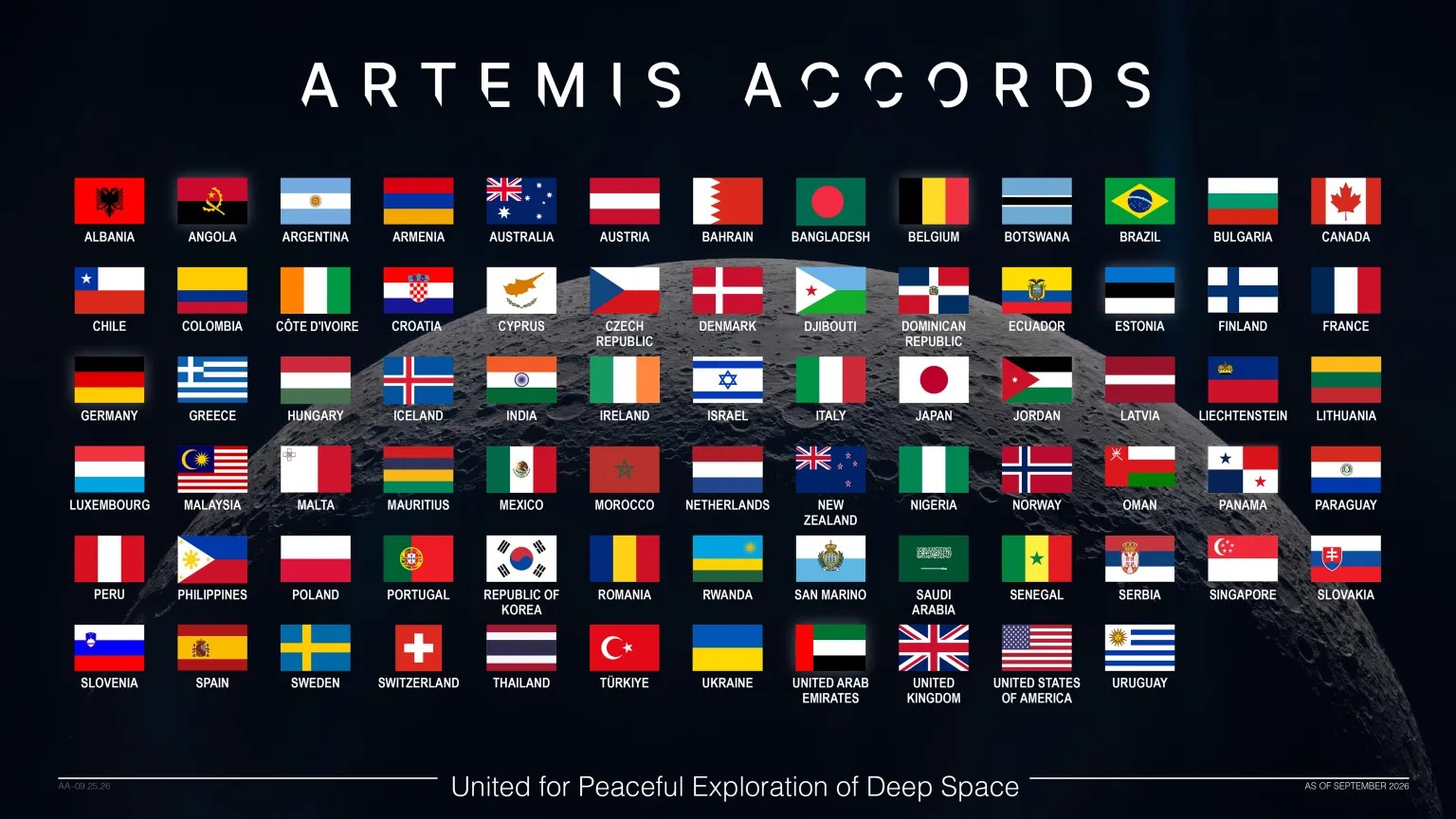
NASA has expanded the Artemis Accords to 76 participating nations following the recent inclusion of Albania, Croatia, Côte d’Ivoire, and San Marino. This coalition, which began in 2020 with eight founding countries, now represents nearly 40% of the world's nations and includes approximately two-thirds of the signatories to the 1967 Outer Space Treaty.
The initiative is governed by the Signatories Group Method of Operations, adopted in 2024. This framework mandates two annual gatherings: a technical workshop and a Principals’ Meeting held during the International Astronautical Congress. Virtual sessions are also conducted throughout the year to facilitate the implementation of shared standards.
Participating countries collaborate on technical alignment, including interoperability, scientific data sharing, and noninterference protocols. Recent workshops focused on lunar mission planning and open science practices. The upcoming Principals’ Meeting in Antalya, Türkiye, scheduled for October 4, will address support for emerging space nations and lunar debris mitigation.
The Artemis Accords serve as a foundation for international cooperation in lunar and deep space exploration. NASA has invited all signatories to contribute to the Moon Base project through scientific payloads, CubeSats, and technology demonstrations. The agency expects further growth in the number of participating countries in the future.