The community-developed compatibility tool AMDLSS 5 has reached version 2.0. This update focuses on optimizing the layer that allows Nvidia DLSS features to run on AMD Radeon graphics cards. Developers report that the new version improves performance by reducing communication overhead between the CPU and GPU and refining resource management.
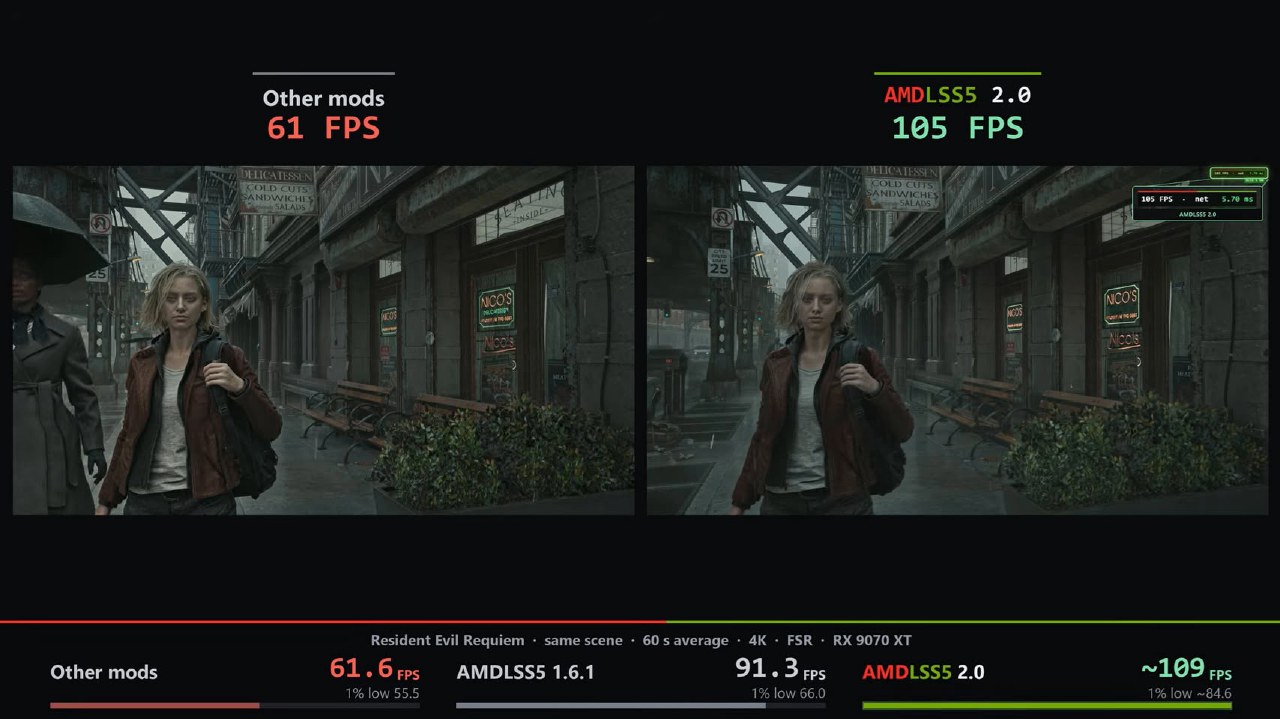
Official testing indicates significant performance gains in games supporting DLSS. In some scenarios, frame rates increased by up to 64% compared to previous versions of the tool. Most tested projects showed double-digit percentage growth, alongside reduced latency and lower resource consumption during operation.
Version 2.0 expands compatibility with newer DLSS libraries, aiming to minimize graphical artifacts, crashes, and functional failures. The tool now supports DLSS Super Resolution, Ray Reconstruction, and Frame Generation. Developers note that performance improvements vary based on the specific game, GPU model, and resolution settings.
While the tool enables DLSS features on non-Nvidia hardware, the developers emphasize that it is not an official Nvidia solution. Performance and stability remain dependent on drivers, game versions, and hardware environments. The team plans to continue refining efficiency and tracking future DLSS updates.